






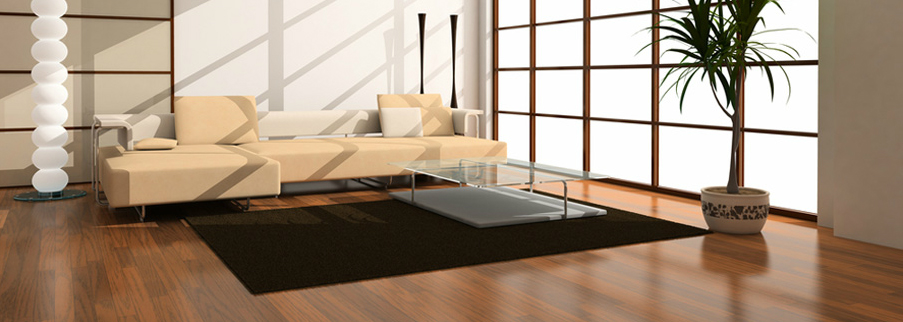
Wood Flooring Tips
Tips There are many different types of wood flooring so your first step is to assess what type of surface best suits your specific needs.
Entry or Foyer: Generally this is the first area your guests see in your home. The foyer is your first place to make a statement and because of this custom designs tend to be the most popular choice.
Kitchen or Family Rooms: Hardwood floors are a common choice for these areas. They require little upkeep and are great with open floor plans. Dark and white wood do not work well in these areas due to the amount of foot traffic and constant wear.
Formal Living or Dining Rooms: Darker wood is most popular with these rooms. When using dark wood remember that it makes your space seem smaller and generally require more maintenance.
Bathrooms: Bathrooms that are in constant use should not be a consideration with hardwood floors. A guest bathroom that is not used daily hardwood might be an option.
Home Offices and Bedrooms: Offices usually opt for darker colors (regular maintenance will be required). Hardwood floors do well in bedrooms, they are best when coupled with area rugs.
Once you have established which wood flooring you want for your space, your next step is to research and discuss your options with an expert. Below is some very important information you should know before you go ahead with your installation.
Do you want a domestic or exotic species? There are varying grades and uses for each type of wood flooring. For example, only some species can be used over radiant heat while others might handle humidity better than certain species. You should establish which grade you want for your flooring since all species have different standards. The higher grade the wood is the higher quality product.
You should know the dimensions of the flooring you have chosen. The lengths and widths are important factors when adjoining floor surfaces at doorways. You may find that the pattern of the product is not right for your space. You also want to specify the direction your floor will be laid. Whether it’s simple strip or plank or an intricate parquet design, choose the direction before installation.
Request a sample of the flooring you have chosen with the final finishing type. There will be color variation between boards as they form naturally. Also, every manufacturer has different color finishes so it is important to have a sample of your final choice. Ask your installer what kind of moisture meter they use. When choosing an engineered thickness you should give priority to the wear layer of the surface or the way in which it adjoins with your other flooring surfaces. Generally the more ply layers the more stable the material, however, should not determine which product you choose unless the surface is over radiant heat. Again, give priority to the wear thickness or, if you do not plan on staying in the specific location in question for more than 10 years, you can choose on a cost basis.
You should decide if you want random length flooring or uniform length. If installed properly, uniform length flooring can look similar to the more traditional looking random length. Listen to your contractor, technician, designer, etc. Personal preference is your first concern but they know best whether or not your choice will suit your space. Ask questions if you don’t know about something! You don’t want to raise them after the floor is installed.
If you have any questions about the information above take a look at our Frequently Asked Questions (FAQS) page. If you are still uncertain about any information feel free to give one of our friendly customer service staffers a call!
 Hardwood floors are an investment that will last for a long time with the proper installation...
 Refinishing and sanding your hardwood floors is necessary to preserve their quality and beauty.
 Proper care & polishing is a huge part of protecting that investment. Wood floors are not.